A perfect electronic sound can still leave you cold. Modern indietronica becomes interesting when the polish has a crack in it: a vocal that sounds close enough to hear someone breathe, a synth part that wobbles slightly out of certainty, or a huge beat that arrives after a stretch of near-silence. The technology is part of the language, but the emotional stakes have to come from somewhere more human.
That tension is why the style continues to matter. It sits between indie songwriting and electronic production without treating either as decoration. A song may begin with a piano phrase, a guitar loop or one unresolved line of lyric, then grow into something widescreen through sampled percussion, processed voices, granular noise and low-end weight. It can be intimate and physical at the same time.
What modern indietronica sounds like now
Indietronica has always been a broad, slightly slippery term. It can point towards the warm electronic melancholy of The Postal Service, the bright, overloaded colour of early M83, the broken-beat unease of Portishead, or the skeletal minimalism of The xx. Those references still make sense, but modern indietronica is less defined by one set of sounds than by the way it holds opposites together.
There is usually a songwriter’s instinct at its centre. The track needs a feeling, a point of view, a melody that stays with you after the production details have faded. Around that centre, electronic tools can change the sense of scale. A chorus does not need to get louder to feel larger. It might widen through harmonies, a new layer of distortion, a kick drum entering beneath an ambient wash, or a single repeated phrase gaining emotional force.
The current version of the genre is also less concerned with proving that it is futuristic. We have all heard immaculate presets, pristine vocal chops and drops designed for the first few seconds of a social clip. They can work, but they are not automatically evocative. The records that endure often sound more selective. They leave room for old instruments, ugly textures, accidental noise and moments that would be difficult to reproduce exactly.
That does not mean every track needs cassette hiss or a detuned analogue synth to feel real. Sometimes clarity is the right choice. A clean vocal over a restrained electronic arrangement can be devastating. The question is whether every production decision serves the song, rather than signalling that the producer owns a lot of software.
Modern indietronica is built on contrast
The most affecting tracks in this space tend to use contrast as arrangement, not just as mood. A soft, almost conversational verse makes a distorted chorus hit harder. A dense wall of sound means more when it follows emptiness. A warm chord can feel unsettling beneath a lyric about distance, regret or disconnection.
I tend to think of production as a way of framing the emotional centre of a song. If the lyric is fragile, I do not always want to bury it under twenty competing parts. Sometimes the better move is a close vocal, one unstable pad and a beat that arrives late. Other times, the song needs to become overwhelming because that is what the feeling actually is. There is no fixed formula, only the job of listening for what the track is asking for.
Post-rock has quietly influenced a lot of this approach. Not necessarily through obvious guitar crescendos, but through patience. A track can earn its release by taking time to establish a place. Mogwai’s sense of scale, ambient music’s attention to space, dark pop’s directness and electronic music’s physical detail can all meet in one arrangement. The result can feel cinematic without becoming soundtrack wallpaper.
Texture should carry meaning
Texture is one of the great strengths of electronic production, but it is easy to use it as filler. A field recording, vinyl crackle or reversed guitar can create atmosphere quickly. The stronger choice is to ask what that sound suggests. Does it place the listener in a room? Does it make the chorus feel distant? Does it create a little unease beneath a beautiful melody?
In my mixes, I have found that a single recurring texture can do more than a hundred constantly changing effects. It might be a blurred guitar note, a breathy vocal fragment or a low mechanical pulse. When it returns at key moments, it becomes part of the track’s emotional memory. The listener may not consciously identify it, but they recognise the world of the song.
There is a trade-off here. Too much detail can make a track feel impressive but emotionally unreadable. Too little can leave it underdeveloped. For the way I work, the useful test is whether removing a layer changes the feeling. If it does not, it may only be taking up space.
Rhythm can be physical without becoming generic
Modern indietronica does not need to choose between a beat and a sense of atmosphere. A kick drum can provide momentum without turning the song into a standard dance track. Broken percussion, restrained sub bass, hand-played elements and moments of rhythmic dropout can keep the body involved while preserving the song’s vulnerability.
Trip-hop remains a useful reference point because it understands weight and restraint. A slow beat can feel enormous when every sound around it is placed with care. Bonobo’s fluid movement, Nine Inch Nails’ industrial pressure and dark pop’s sharp economy all offer different lessons: rhythm is not merely there to make a track move. It can create tension, intimacy and threat.
That said, not every emotional song needs a slow pulse. Faster tempos can work beautifully when the vocal carries uncertainty or longing. The contrast between a propulsive rhythm and a reflective lyric often creates its own kind of ache. It depends on whether the motion feels truthful, not whether it fits a playlist category.
Why the songwriting still matters most
Electronic production can make a small idea feel immense, but it cannot give an empty lyric a life it does not have. The strongest indietronica songs usually contain a phrase that feels specific enough to belong to one person, while leaving enough space for someone else to inhabit it.
That is harder than writing in broad declarations. “I miss you” may be true, but a detail can make it memorable: the light from a mobile screen at 2 am, an unread message, a street seen from the passenger seat, a room after everyone has gone. These are not rules for lyric writing. They are reminders that emotion becomes more powerful when it has a shape.
Vocals also do not need to be technically flawless. A voice with grain, limitation or hesitation can be far more compelling than one that has been corrected into anonymity. Pitch tools, layering and effects are useful instruments, but they should support the performance. If the vocal is meant to feel like a confession, leaving a little instability may be the point.
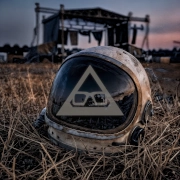
This is where independent artists can have an advantage. There is room to make records that do not chase the loudest current trend. A release can carry its own visual language, artwork and atmosphere without needing to explain itself in ten seconds. For a project like Most Epic Dream, that connection between a song, its image and its emotional afterglow is part of the work, not an extra layer added after the fact.
The genre works best when it leaves a question open
There is a temptation to resolve everything in production: make the chorus huge, make the vocal clear, make the ending decisive. But some songs stay with us because they refuse to close the door completely. The final chord can remain unresolved. The drums can disappear before the emotion does. A lyric can stop just before it explains itself.
That ambiguity is not vagueness for its own sake. It is trust. It gives the listener a place to bring their own memories, and that is often where a track becomes personal beyond its original maker.
Modern indietronica is at its best when the machines do not erase the person behind them. Let the synths glow, let the drums hit and let the textures become strange. Just leave enough of the human pulse in the recording for someone else to recognise their own.